Now I finally know all my students (bar the few that have never turned up to my lessons), life is so much easier. There is so much power in learning a name – particularly when there is a ready to learn behaviour system!
7C– Tutor
Firstly, I thought I would update you on my lovely tutor group. Unfortunately, I have had to have a lot of chats about kindness with them. The transition to secondary proved hard for a lot of them, especially the ones who struggled in primary. I have decided to make this a priority in the next term, where I will have a focus on emotional literacy. Other than that, they have been a complete delight! My head of department (also my NQT mentor) has very kindly offered to take the tutor group on a Friday, giving me a chance to catch up with various different tasks. Even though it’s only 15 minutes in the morning and 10 minutes in the afternoon… it does make a big difference to my day!
7A3– Introduction to Poetry
Differentiation has been the biggest challenge with this group. I have got two lovely students with a reading age of around 5 – they only got 2/20 on a KS1 reading test. They have a teaching assistant with them and I had made them various worksheets to do instead of the main lesson. However, they still found these sheets inaccessible. I had a think and a chat to their TA to come up with something that they could access, that would promote the use of different words and could potentially build up their vocabulary. As seen in the picture below, this is the kind of sheet I do for them in each lesson now. The picture is loosely related to whatever we are studying (for example, the birds are for Hope is a Thing with Feathers) and then they have to complete the tasks.
So far, this seems to work really well. The colouring really helps them to settle and the repetitiveness of these activities mean they know exactly what they are doing in my lessons. I am also able to give them praise points if they go above and beyond what I expect of them, which is completely fantastic!
One of my highlights of this group this term has been the relationship I have built up with one particular student. At the beginning of term he didn’t contribute much and, in his notes from primary, it said that he was very shy. I will never forget we had on O’ Captain, My Captain’ where I witnessed a confidence shift in front of my eyes. He has a ridiculously detailed knowledge about American presidents (he knows more than me!!) so I referred to him as the class expert throughout that lesson. At the end of the lesson, he stayed behind to thank me. He said he has never felt that confident in a lesson before. Since that lesson, I have watched him blossom into the kind of student who will answer any question I throw at him. He has also showed me some poetry he had written in his spare time. I made sure to ring home to tell his parents about how fantastically he is doing this term, and his father sounded like he was crying with joy! Honestly, I can’t get over how amazing this job can be.
8A2 and 8C – Ballads
I see 8A2 a bit more than 8C they work harder and stay on task more so they are an easier group to manage – they are also a much smaller group which helps! On the other hand, 8C are an extremely lively class, but we have had some incredibly interesting debates about the various topics that come up. I do not do the spacing tasks with 8C, which is a shame because they love creative writing.
I have found that with both groups, but especially 8C, the lessons we have in period 5 are extremely challenging. I have tried a few different strategies with both groups – 8A2 respond well to having a 15 minute quiet task to start off with, before moving on to the main lesson, but 8C would still remain off task for the majority of the lesson. Then only thing I have found that works with them, is watching a video and then doing creative writing based on it. (An example being watching a video on the jobs children had in the industrial revolution, then writing a diary entry about a day that went wrong at work).
Whilst this has been great, because anytime I tried to do a normal lesson, I would end up having to redo it the next lesson anyway, I am concerned that I am not following the scheme properly, and we have missed out a few bits. At this point, however, the students seem to be enjoying English and I had my first period 5 lesson with 8C in week 8 where I did not want to cry from exhaustion at the end of it!
10F1 – Macbeth
I LOVE TEACHING MACBETH. There, I said it. I did not think I would enjoy teaching GCSE English literature in a year – it is a lot of work, but so far I am thoroughly enjoying it and, I am ecstatic to say, we have finished reading the play! We’ve got a week and a half left on the play, and I have left out a few important scenes I want to go back over before their end of unit assessment, but I am feeling, on the whole, confident with these students. I have got such a delightful class – I always look forward to teaching them!
11S– EnglishLanguage Paper One
Year 11s have proven to be my most challenging group. Their behaviour is technically good, they follow all the school rules and get the work done well. However, they just don’t engage with me or each other! It is actually painful at times. I’ve only had three hands up over the term, to answer a question I have asked, and two of them were from the same person! Hands down questioning has definitely been my best friend in this class.
Luckily, the HLTA in our department has been allocated to this class in a week 1, so I am not alone in my misery! Don’t get me wrong, they’re a lovely bunch, I just find myself getting bored or doing a LOT of teacher talk. They have their mocks on the first day back, so we will see how they go before I comment further!
Currently reading
Knife Edge – Malorie Blackman (currently on hold as I’ve lent it to a student over half term – I knew she would read it quicker than me!)
Tales of Mystery and Imagination – Edgar Allen Poe
So…. I have started this post at least four times over the past couple of months, but things just kept getting in the way! School related stuff, like planning, marking etc; socialising (I actually maintained my social life this term to an extent! I know, shock!); and most importantly spending time with my better half… we have now moved in together and are relishing every moment. This has also been amplified by the sheer exhaustion that is definitely more of a personality trait than a feeling!
I have decided to write two blog posts about the first term. This first one is going to be about strategies I have put in place that have worked for me this term, and the second one will be more focused on my classes and teaching and learning.
The first thing I would like to state is not only have I made it through my first term as an NQT, but I have loved (nearly) every second of it! After having a significant amount of low points (well hidden) last year, I was completely anxious about starting in September – mainly because the move from PGCE to NQT means a complete shift in responsibility and suddenly I was acutely aware that all these students will be dependant on me and me alone! I am still waiting for that overwhelming moment where I am consumed with doubt, stress or failure – it hasn’t hit yet and I am calling that a win!
One of the main things to help me this year, is to make sure I am prioritising myself. It is so much easier working on my time and not having to wait for another teacher to hear my ideas – if I want to go off the scheme of work slightly then I do! I have been giving myself the equivalent of two days off a week minimum. As much as I could live and breathe teaching, I am very aware that that is not healthy – it is necessary to have a life outside of school! One of my lovely colleagues has invited me down to the yard on Tuesdays after school, and it has been so therapeutic being able to spend some time around horses – something that I have not done for a very long time! Having something booked in every week as helped me focus and get my work done, so I don’t miss out on the fun!
Using the shared resources more is something that has also been ridiculously helpful. My planning time has been halved – there were so many boxes to tick last year, it often felt like all I was doing was ‘reinventing the wheel’ – even though that is what we were told not to do! I have contributed the odd idea to the department, but in using what is already there, I have saved myself a lot of valuable time. Marking has also taken up less time. I have managed to work out what I am marking and when so that I don’t have a lot to do in one go – I have even left myself with none for the half term which is a complete blessing.
But, finally, the main thing that has been helping me is the support I have around me. As mentioned earlier, I have recently moved in with my partner and he has gone above and beyond to make sure that I have a stress free life… well as stress free as it can be! He is so good to me and I am very fortunate… I know that he is definitely value added to my mental wellbeing staying in the positive! The other big support system is the school I am at, specifically the fantastic English department. I have got a lot of amazing friends in some brilliant teachers, that have let me observe them, shared resources with me and above all, let me know that everything I am feeling is normal! It is normal to have a class that drive you insane, it is normal to get annoyed by teenagers, it is normal to feel overwhelmed at times, it is normal to have to scrap your original lesson because the students aren’t making progress. They always have something positive to say to me and I will be forever grateful for their help both now and in my first placement.
Finished reading
The Paper Menagerie and Other Stories – Ken Liu
Jack the Ripper – Paul Rigg& John Bennett
Macbeth – William Shakespeare
This is Going to Hurt: Secret Diaries of a Junior Doctor – Adam Kay
Eleanor Oliphant is Completely Fine – Gail Honeymoon
I knew in my heart of hearts that my two months off would go quickly, but that didn’t stop the sheer panic I felt Sunday evening, knowing I would be starting a new job the following day. As I worked at this school during my first placement, I was grateful that I already knew the team fairly well – I had spent a few hours catching up with one of the lovely ladies on Sunday (she was incredible at calming my nerves… so thanks if you’re reading this!) and I knew I couldn’t do anything else to prepare for the job as I did not have my timetable yet.
Luckily we had an inset day Monday, so I was able to ease myself in. In all honesty, I was completely terrified and felt totally overwhelmed. I knew not much would go in so I thought I would be kind to myself and not give myself any more work than necessary! I found out I am going to be a tutor for a year 7 group, which is super exciting as I will get to experience helping out the newbies and hopefully become their first port of call over the year!
The one thing I knew I was going to have to get a grip on straight away was my own wellbeing. I have a tendency to throw myself completely into my work and think about the consequences of my own feelings later… which proved tricky last year. I am a workaholic but I know I’m going to need to try and minimise the amount of work I do at home (for my partner’s sake just as much as mine!). This week I have combated the anxiety by taking everything a day at a time and making sure I am not ‘reinventing the wheel’ by making use of the faculty’s amazing resources (my partner can vouch for how excited I get when I am looking through lessons on the shared area ).
I am also going to try and limit the amount of time I spend blogging – there were a few occasions last year when I spent well over an hour, because I was avoiding doing anything else. So I am going to trial just thinking about what has gone brilliantly and what I want to make a priority next week. I am hoping these small steps will help me to have a positive outlook on the week and give me focus for the next. There will be no doubt the odd funny anecdote included too… I have got a few um…. interesting characters in my classes that have had me in hysterics.
Things to celebrate
This week I have made a good start in building good relationships with my classes. My year 10 and year 11s are a tad painfully quiet at times, but I’ve got them working hard already so that’s fantastic. They were the two classes I was most nervous about, with the looming GCSEs in the summer. My year 10 this year couldn’t be further from my bottom set I had in my final placements last year, but I have a feeling I am going to like them just as much. My year 8 and year 7 classes are completely bonkers… which I love, but may become challenging at times. I also survived my first time on duty… which was on the first day the students were here!
I am also proud of how I have been dealing with the work load – I’ve even made sure I have time to do a bit of yoga and jogging this week (let’s see how long that lasts)! As I said earlier, the faculty is AMAZING and I know I could ask anyone anything and they will help me out with anything I need…no matter how ridiculous the question! The support I have there is the main reason I was so ecstatic to accept the job there. Most importantly the lovely head of department (who obviously has loads on her plate without adding me to it!) is my NQT mentor and I couldn’t ask for a better mentor. She helped me out a ridiculous amount last year, so I am looking forward to having her help me out this year too!
Things to focus on
During my first NQT meeting with my mentor, we discussed the targets we should make for me in my first term. The two main things that came out of our conversation were getting used to the KS3 curriculum, including how grading works, and becoming ‘warm but strict’ (she picked up on the fact that I can be a bit soft at times and I need to ensure I am using the behaviour policy correctly and effectively). As it is still early days, I am going to focus on RtL next week, hopefully getting to learn more of their names in the process (honestly makes RtL MUCH easier to use). In particular, I want to work on my year 7 group. I’ve only taught them once, but they were an extremely lively group and I need to ensure standards are set well, as they will be mixed up in the next few weeks and we will have slightly different groups.
I am also intending to continue to organise my classroom – note to self, bring my folders into school!!! – and I would like to have a look through at least the year 10 and 11’s books mid week.
The most entertaining job…
I’ve had a couple of face palm moments this week (often things I do or say oops). But here are a couple of great moments from my classroom this week…
Year 8
(Written on the board is the class’ definition of a ballad starting with ‘A ballad is…’
Me: Do we all think this is a good enough definition? Does anyone think we should add anything or change anything?
Student: Me! I think we should…. oh wait I’ve forgotten……………… OH! Yes we should put at the end ‘and it is a ballad’.
Tutor group
(I had been explaining the ready to learn behaviour system)
Year 7 student: Had this been checked out by a psychiatrist? Us year 7s have enough stress to deal with without having to worry about being in isolation…
Safe to say I reassured him that many schools were using ready to learn and that if he was concerned, maybe he should simply follow the school rules and not end up there.
Anyway, I have finished the week on a high – I am truly loving teaching Macbeth (the text I was most worried about teaching) and I am feeling more confident now I have met most of my students. Bring on next week!
Currently reading
The Paper Menagerie and Other Stories – Ken Liu (This is the book I will be reading during ‘drop everything and read’ at school!)
Jack the Ripper – Paul Rigg& John Bennett
Macbeth – William Shakespeare (Obvious reasons)
This is Going to Hurt: Secret Diaries of a Junior Doctor – Adam Kay
Eleanor Oliphant is Completely Fine – Gail Honeymoon (Finally… late to the party with this one, I know!)
It feels like years since the PGCE finished, yet I still find it hard to believe that it is all over! Especially as the past few weeks have been filled with preparations for starting as a newly qualified teacher in September – as well as spending a month back in Early Years! I’ve had a lot of people saying how they have been enjoying reading my blogs… so thank you to those people! I decided to do this post to talk about my induction day, the Team English Conference and going back to Early Years, as well as what I am intending to do over the summer to prepare myself for going back into the classroom. (Whether this will happen or not is to be confirmed, as I am exhausted all the time at the moment… I was going to write this at the beginning of the week!)
Induction Day
Sitting down and typing this now, I have come to the realisation that I genuinely can’t remember if I’ve blogged about this already. So I’m just going to write about it regardless! It felt amazing going back to the school knowing I have a job there! There was a lot I already knew, as I had basically had the same talks in P1 as a part of my PGCE training, but there are a few new things that will be starting in September.
Firstly, the school have invested in Class Charts, which genuinely fills me with excitement. They have found, with the RtL behaviour system, that a lot of students have been slipping under the line by only getting one warning – which is never recorded. This software will mean that every behaviour instance is recorded but, and more importantly in my eyes, praise is also recorded – meaning I can continue to teach (hopefully effectively!) with an emphasis on praise. Parents will also be able to see this, as I believe there is an app they have? Again, this will make communication with parents a lot easier as they will already have a better idea of what is happening in the classroom.
There is also a rumour the school is going to put a ban on mobile phones. I have mixed feelings about this. I believe it is important for students to socialise with each other rather than their devices, and my second placement school succeeded in reducing the amount of cyber bullying by having a complete ban on them! However, I do feel like they can be used effectively in the classroom, and I am a big believer in moving with technology as opposed to banning it completely – plus I love a Kahoot!
Unfortunately, I did not get my official timetable for next year, but I was given a document with an idea of what my timetable will look like. I will be having year 7, year 8, a shared year 8, year 10, year 11 and one library lesson a fortnight with a year 9 class. So, to those of you who can remember any of my previous blogs, I will be taking TWO CLASSES WHO WILL BE TAKING GCSE EXAMS!! It is safe to say I am equal parts nervous and excited – mainly nervous about my year 10 class. The thought of taking a group of 14/15 year olds through all of GCSE literature in less than a year is truly daunting – especially as I haven’t taught anything from paper 1 yet. BUT… I am super excited for the challenge and I keep telling myself they wouldn’t give it to me if they didn’t think I would get good results with them! So spare a prayer for my year 10s and 11s…. they’re in for a whirlwind of a year!!
Team English Conference
I was also lucky enough to be invited by my head of English, who was speaking there, to the Team English conference this year. For those of you who don’t know, Team English is a twitter account that was set up in the wake of the reformed GCSEs as a way of grouping together advice for teaching the new curriculum. This has grown and they now have nearly 24K follows… any teachers who don’t follow them give them a follow here -> https://twitter.com/team_english1?lang=en .
Before we even got to Peterborough, I had to choose who to see speak. This proved pretty hard, as we had covered a lot during the PGCE and there were quite a few people who were sold out. I won’t go into detail about everything I saw, (mainly because I left my notebook in Bristol) but I felt like I had to mention this to anyone who is or is becoming an English teacher. The conference was completely inspirational and I have picked up a lot of tips and tricks (plus an included lunch and a complimentary bag filled with goodies… win win)
Early Years
I have been both working back at nursery and babysitting over July and, honestly, when it came to the evening before I was petrified… what if I have forgotten how to work with the smallest of humans! This has been the longest stint away from nursery that I have ever done, so I was aware a lot of the children will have either forgotten me or just simply won’t know me.
Obviously, as usual, I was completely ridiculous to think that – it literally took minutes for me to settle back in (it is impossible to forget how to look after children clearly!) and it was completely amazing to see how excited the children were to have me back!
I imagine that this may well be the last month I will spend working in childcare, so I am just simply enjoying it. It will be heartbreaking to leave again, as it always is! But I am also so completely certain I have made the right choice for me.
Preparation for the NQT year
So this brings me on to what it is I will be doing in preparation for September. I have had hideous waves of imposter syndrome consuming me on an almost daily basis – I am still blown away by the fact I have actually got teenagers to make progress in my lessons. Anyone that knows me knows how annoyingly organised I like to be – contrary to the belief of many of my fellow PGCEers (yes I just coined this and no I don’t care if it’s grammatically correct) my organisation does NOT mean I have it altogether and am living my best like as a teacher 2k19 … actually that couldn’t be further from the truth. I am often a nervous, anxious mess and I have found that making to do lists and actually DOING things on my to do list help me an awful lot. I also appreciate a lot of people work differently to me.
That being said, my to do list for the summer is:
Read, read and read some more! Mainly texts I will be teaching next year, approaching Shakespeare from a critical point of view is also necessary, but also treating myself to books I want to read as well!
Have a break… a big break! I have literally finished my PGCE and thrown myself back into full-time work. Yes I am that crazy. So August is going to be my respite, travelling around Eastern Europe with my lovely boyfriend… and I imagine that will be over as quickly as it started, but I am relishing the idea of not even (hopefully) thinking about next year and just living for the moment. (I am such a cliche soz)
Maybe attempt to do some creative writing… if I feel inspired… oh and try to exercise more regularly too (neither of these have come to anything yet but we’re getting there!)
I have been instructed by my head of department (so it’s totes official) to not bother planning anything other than my introductory/admin lessons, as I don’t know my classes yet. So that will be a job for the last weekend in August!
I am (hopefully) going to reflect on this as an approach to starting my NQT year after both my first week and the end of the year. If this could help out any future NQT then that would be amazing… if not at least I have a great time writing these blogs!
That’s all from me for a bit now… I will be back in September!
J 🙂
Currently Reading
Malorie Blackman – The Stuff of Nightmares After reading Noughts and Crosses I wanted to explore more fo Blackman’s work. This was completely different to N&C, but I still really enjoyed it! More of a thriller – there is a train crash and the protagonist has to jump into his classmates’ nightmares to avoid death. Some interesting plot and character developments, a fairly easy read that I will hopefully be able to recommend to students in the future!
Iseult Golden and David Horan– Class A very interesting play about parents’ attitudes to teachers/ school in general, combined with what could happen when a teacher over steps boundaries. I loved it, but feel like (as always with plays) I would love to see it performed!
Cat Clarke – A Kiss in the Dark A really interesting story about a girl who falls in love with a boy… except the boy is a girl. It’s one of those books that makes you want to strangle the protagonists as they’re so annoyingly naive, but it poses some interesting perceptions on how sexuality is perceived.
Aldous Huxley – Brave New World I have been dying to read this for ages, so that probably contributed to why I didn’t actually enjoy it as much as I hoped. Yes, it has the typical dystopian qualities, I just felt it was just a bit too weird! Saying that, I did enjoy reading it and couldn’t put it down in places… I just probably wouldn’t read it again!
Joanne Limburg – The Autistic Alice A completely beautiful anthology of poems, separated into 3 main sections – overcoming her beloved brother’s suicide, using Alice and Wonderland as inspiration to write about having autism and then some random poems at the end. This anthology regularly brought me to tears and I thoroughly enjoyed reading it – this doesn’t often happen with me and poetry!!
Arthur Conan Doyle – The Sign of Four A potential GCSE literature text – will be following this withDickens’ A Christmas Carol in order to decide which one to teach to my year 10s!
William Shakespeare – Twelfth Night
Ken Liu – The Paper Menagerieand other stories I found it! I read the title story last week and it made me cry. It is about an American boy with a Chinese mother, who didn’t speak much English, and an American father, who didn’t speak much Chinese. It follows the boy as he grows up and rejects his Chinese heritages and how he deals with his mother’s death as an adult. Completely beautiful and something I think everyone should read! I feel like this would work fabulously in a classroom setting too – there is the potential that a lot of students can relate to the feeling of alienation from their personal culture.
Kazuo Ishiguro – Remains of the Day Still finding it dull, but forcing myself to finish it before September… deadlines tend to help!
This post is going to be different to the rest of my posts. Tomorrow is my final day at university, bringing about mixed emotions! Before the exit tutorial (which is in 2 and a half hours time as I am writing this… probably should’ve started this earlier!), we have been asked to write a final reflective post about the year as a whole.
My issue is I don’t know where to start – so I’m just going to see where my brain takes me!
This time last year I was beyond nervous. I was spending my last few months at the nursery I have loved working at (and will be going back to work for the final time in a few weeks!) and still questioning about whether I was making the right choice. You see, to me, working in Early Years education is crucially important, there’s just no funding in it – and I also wanted to seek out something that could stretch me academically too. But I was comfortable in this setting and it had become my safety net for the past 8 years. My home.
Making the transition to the Primary school, where there were a lot of familiar faces from the nursery, made me further question my decision. Would I prefer working with the younger children? When any of the parents at nursery asked me what I was going to do at university, most of them presumed it would be at a primary level, seeing as I was working with their children. This made me constantly question myself, reassuring myself that actually, if I didn’t like secondary as much, I could just find an NQT placement in a primary school.
Then came the first few weeks at uni, where I have made a lot of friends for life, including those who made the brave decision that actually teaching is not for them. But, again, the doubt cloud was hanging over me and the time for me to be in front of a class was approaching quickly. I learned a lot in the first few weeks of uni and had a lot of fun in the process – and I have already used a lot of the activities we looked at then in my practice since.
Before long, it was time to go to my placement school, where I felt at home straight away (despite starting out with a UTI… not the most pleasant!). I was instantly reassured that I wanted to be working in a team of English specialists, where I could combine my love for English with my passion for working with young people (cheesy I know!). My first lesson with the year 7s was not perfect in the slightest, I rambled a lot, relied on my lesson plan heavily and constantly doubted myself. BUT they listened eagerly, answered my questions and actually seemed to like being there. I had completed the first hurdle and I was on a teaching high.
Weeks past and I had my highs and lows. I got into a ridiculous cycle of feeling really down and anxious every Tuesday and Wednesday evening, I’m guessing it was to do with the workload ahead of me. I was still getting my head around teaching and all the trillions of components you have to balance simultaneously and it was taking its toll. Nevertheless, I still loved it.
Then I had my make or break moment. I am certain I will never forget it. The incident when one of my year 9s displayed intimidating and aggressive behaviour in my classroom, where I was not supported by the supply teacher. I can put my hand on my heart and say that if it was not for the support of the English faculty and other teachers that came to my rescue, I would not have wanted to continue. It scared me. I was scared the student would hurt another one of my students in my lesson. But he didn’t. It was resolved and I put in the request to have sessions at uni about extreme behaviour scenarios and how to deal with them (which, sadly, did not happen… but hopefully will for the next cohort). It’s all very well in saying that it comes down to instinct, to experience. But how are we supposed to have that instinct when we have no experience? How do we know where the balance between safeguarding the student displaying aggressive behaviour, safeguarding ourselves and safeguarding the other students? How do we know exactly what to log about the incident and when? How do we know what to do when students see you clearly antagonised and crying? I am not naive, I am aware there is no simple answer these questions, but I believe that there must be some sort of toolkit that can be devised for extreme behaviour. All I wanted was for someone to stand at the front of an EPS session and give top tips about how to manage a situation like this – and other unpleasant situations that we could find ourselves in. We’ve had so much on safeguarding children and prevent, but not that much on safeguarding ourselves.
Luckily, I was able to work closely with their class teacher and regain the rapport and respect I had already built up. It wasn’t long until the end of placement 1 and I was dreading going back to uni. Not because I didn’t enjoy uni, but because I felt like I was leaving behind a family – a family that I will now be rejoining in September!
I worked so flipping hard over the first placement, so I decided to give myself a break over the Christmas holidays. I already knew what I would be teaching and, despite not having the lesson plans, I had an idea of what I could do to begin to prepare myself. That all went out the window. I am still not sure about whether I made the right decision. If I had been able to finish Bleak House and research more about the a-level subjects I would’ve felt a million more times confident and competent in my second placement. However, I finally managed to relax and enjoy myself in a way I hadn’t since September, and it felt great.
The balance between workload and actually having a life outside work is a tricky one with teaching, one I find particularly difficult because I love the job an insane amount. I enjoy researching, lesson planning, marking and heck – I even loved writing the reports (let’s see how long it takes for that to wear off). My second AT’s do it, do later, delegate and don’t do really helped me out and I have found I do that more naturally now, putting other more important things in my life first. I am the sort of person who likes to get things done straight away – I hate a last minute rush, it makes me horrifically anxious. However, I have come to terms with the fact I will have to do that sometimes in teaching. It’s finding the balance. At the moment, I have found that switching off by 9pm (with the exception of pub quiz night), including both school work and things I do for personal pleasure, I have been able to have a more manageable and enjoyable life. I have been dedicating my post 9pm time to reading and (obviously) sleeping and it has helped me to become more rested and therefore alert in the day! I am aware that this may not be the case forever, but I will be sticking to that in September and hoping to see the same results!
P2,3&4 are now a blur. I am just as strongly attached to that school as I am to my first placement school, where I have had a similar experience with building up fantastic relationships with teachers and students alike. I have throughout enjoyed working with sixth form – being able to chat to them about university and getting a feel for what they are interested in (plus the gossip in my sixth form tutor group was always entertaining!). However, the thing I will miss the most is the personal challenge for me. Being 2 and a half years out of university, where I made a point to only read for pleasure until the PGCE, I had become rusty on terminology and theories. Being reminded of them brought back my love for analysis in both language and literature and I would always leave the lessons having learned something from the students as well as teaching them too. It is a shame that I won’t be teaching sixth form at my next school, but it is something I know I will do again in the future.
I am not going to go into too much detail about the rest of my classes – they have been frequently mentioned for the past 6 months! Instead, I am going to focus on what I have done that I am particularly proud of in these lessons, before moving on to what I plan to improve in my NQT year.
Having a focus on positivity has to be my greatest achievement over this placement school. Not only was my rapport with each class extremely high, but they (and I!) have really enjoyed my lessons. The pink for perfect starters, Haribo quizzes, exit tickets, differentiated group work, having students for teachers, differentiated DIRT and student-led discussions have been amongst my favourite things I have done in my classes. I have had students telling me that I have helped boost their confidence, seen students make outstanding progress and have successfully created a classroom with mutual respect and high expectations. I am going to miss each and every one of my students and the craziness that every day brought to me!
Thinking forward then to my NQT year, I am going to aim to build up fantastic relationships with all of my classes once again, with the emphasis on positivity. Following my most recent assignment, I will also be ensuring to have an inclusive teaching practice, centred around the students in my classroom, but also reminding them of the bigger picture. I feel like I will need to be a little stricter in the beginning, which will be easier to do with a rigid RtL system in place, to maintain the high standards in my classroom. I am also going to try and make a head start on the texts I will be teaching that I am not sure about, in order to be able to go into the classroom with upmost confidence.
I am unbelievably excited and nervous for the next year. Being able to have a whole set of classes that are mine is a daunting but thrilling prospect and I am glad to have had the opportunity to do this in a school I already love. I have got my induction day next Tuesday, and I expect I will do a little blog about that (if I feel like it) but, for now, it’s goodbye to the PGCE and the safety blanket and time to enjoy myself for the next couple of months before getting my head back into the game.
Thank you to all of you who have been reading my posts and telling me how much you enjoy reading them. I appreciate that I can go on a bit of a tangent some (most) of the time, but it has really boosted my confidence knowing that there are people out there who have been following my journey. I still can’t quite get my head around the fact that I am going to be a qualified teacher very shortly. It’s been an incredible year and I feel very lucky to have been at two amazing schools and to have had the support of two amazing lecturers!
I wasn’t entirely honest in last week’s blog post, something that I swore I would be for this assignment – to not only help myself, but potentially anyone else that may happen to read my blogs. I have been struggling a lot recently. To the extent where I have been reluctant to leave my house on more than one occasion, the very fact I am a stickler for attendance is the only reason I have made it into uni at all. I’ve been trying to reflect on what that is, and I have some pretty amazing super close friends that I have been talking to about that – one of them being someone on the PGCE course with me.
I guess it’s probably down to the fact that I thrive under pressure and a heavy workload (I’ve definitely made a great career choice!) and that these past few weeks have dwindled down to next to no work to do in the evenings. Yes, it is a gratefully received break from the whirlwind of the PGCE year, but I’ve been left with a sense of… was that it? This is by no means a reflection of the course, I’ve really enjoyed some of the things we’ve been doing this week – the highlights being organising a school trip to a local National trust estate and having the room set up as a crime scene to encourage thinking about different ways we can teach the skills needed for English.
To anyone reading this, don’t be worried about me, I’m pretty sure it’s just a blip and I will get over it! I’ve said before that I am totally rubbish at goodbyes and endings, so I guess this is just my body’s way of reacting to the end of a turbulent year! I’ve got lots to look forward to this summer, including going back to work with the babies at the nursery I’ve been at for the last 8 years on and off for one last time, as well as spending almost the whole month of August travelling around Eastern Europe. Then in September I have the excitement of the new job at an amazing school and also the excitement of the family I au paired for coming over to England for a bit! So, for now, I am going to do my best to focus on the positives and hopefully get me out of this bad cycle.
It’s hard to be honest about how you feel, especially when it comes to mental health and all the stigma around it. I know a few fantastic people who are totally open about the way they feel in a way to normalise mental health. It’s not great that I feel this way, but so many other people have been in the place where I am now and have gotten past it – I mean I’ve been through it myself copious amounts of times in my life already! I deliberated hard about writing this, but I feel it is just as important to share the bad as well as the good. One of my friends said to me that she was surprised that I felt this way, because I seemed to be holding it all together and loving it – and I am all too aware that that is the impression I have been giving off and, for the most part, it was true. I guess what I am trying to say is that I am going to use this productively. Knowing that just because someone looks fine doesn’t necessarily mean they are fine is something I can utilise in my own teaching practice. I want to ensure that students have a safe space to let out their emotions and not feel, as I have, that they have to keep them in. Mental health is important and something that needs to be talked about, so that the younger generations know that they can be helped with feeling like this.
I did not intend to ramble on this long, and I am sure I’ve just waffled for a bit and, do you know what, I feel much better as a result of it! So even if it doesn’t make sense or if no one ever reads this I don’t care! It feels great to vent… even if it is to a computer screen! But now normal service will resume. This will be my penultimate blog post and my final PGCE post will be more of a yearly reflection and, as I’ve left finishing it later than originally anticipated (thanks to the PGCE ball hangover yesterday!), I will be pretty much publishing my reflective post straight away, as I have my exit tutorial in a few hours!
School Trip
As part of our final weeks of the PGCE, the English PGCE cohort had to organise school trip to a local National Trust property. The school we worked with had a high percentage of Pupil Premium students, suggesting that some of them may have never even left the city, let alone gone on any trips to bring in ‘cultural capital’. In order to be able to create a successful trip, we all visited the property before meeting the students, thinking about what we could do with them the following week. We had been given an anthology of 19thCentury extracts, with the intention to read different extracts in different places (e.g. extract from The Secret Gardenin the walled garden, extract from Hound of the Baskervillesin the stable yard etc.). Essentially, these were all to inspire the students to write their own piece of writing at the end of the day.
The following Friday, we went into the school we were working with in order to meet the students. We were working with year 8s and had been split up into groups, I was in EN2 – the second highest ability group. We were very lucky, having a pretty well-behaved group that really responded to all the activities we were doing. We team taught a 2-hour lesson, with the task of preparing them for Monday’s trip. We had no idea how much they already knew about 19thCentury literature, so we decided to approach this thematically and, as having four new teachers at the front could be seen as a little intimidating, we decided to split up and take a mini-group each, focusing on themes from different extracts.
I opted for the extract from Turn of the Screw, which I have yet to read and hope to read soon! As the extract was centred around ghosts, I decided to do some input on the Supernatural, as I had already taught a few lessons about it in the 19thCentury unit for my year 9s at my last placement school. I made a simple worksheet, that both helped me to understand their prior knowledge and what input I would need to give them. It was clear that different students had different experiences with the supernatural, some never having come across the term and others actively reading and watching novels and shows centred around it. By the end of the 20 minutes, all 4 of my groups had a clear understanding about what was meant by the supernatural and began to think about how they could include it in their writing. (Annoyingly, I totally forgot about the work I did with them and should’ve encouraged them to look back at it on the Monday… oops!)
Monday went fairly well! Me and a colleague had a group of 8 students that we were responsible for, taking them around to the various places. There was the odd moment where the students seemed disengaged but, on the whole, I actually think they quite enjoyed it – especially reading the extracts! Half of the students volunteered to read, and the others were able to summarise the extract afterwards. It was the writing part that took a little more encouragement and, if I were to do this again, I think I’d give the day a bit more structure. In giving them the freedom to write what they want, it meant a few felt like they could opt out at the different stations. We were to have 40 minutes in each section, including getting to the place, reading the extract and exploring the area. We found that we had a lot of time spare – our group where quick walkers! – and so we ended up getting them to begin writing in each part. However, I feel like it would’ve been more helpful for them if we got them to plan out their writing whilst we went around and then wrote up a best draft in the writing room.
Our day looked like this:
10:10 – 10:50 Walled Garden – Secret Garden
10:50 – 11:30 Stable Yard – Hound of the Baskervilles
11:30 – 11:50 Outside the house – No extract
11:50 – 12:30 Inside the house – Turn of the Screw
12:30 – 1:30 Lunch & writing time
So, going back to what I was saying earlier, I would’ve changed how we approached it to potentially start at the outside of the house, getting them to plan descriptive writing about their first time seeing the property and the grounds. Then moved to the walled garden to describe how it might feel exploring a place in detail, the stable yard where something bad happens (murder or not!) then finish in the house with the climax and resolution. Or something like that anyway! I feel like if they started to get a sense of a story in their heads, it would give them a little bit more purpose and inspiration about what to write about.
This really made me think about my teaching next year. My last placement school was a high achieving school, where I was lucky enough to give my students a lot of freedom and they would still produce high quality pieces of work. However, the school I am going to work at is looking at improving literacy skills and, from my personal experience with them, some classes were a lot harder to motivate and engage than others.
Final EPS session
I am not going to lie to you… I am not the saddest to be leaving the EPS sessions behind. Despite a lot of them being very interesting, they were long days and my attention span is short (giving me reasons to empathise with my students!). The last two sessions were on NQT year transitions and teaching the lazy way. These seemed perfect to end the year on, giving both an overview of what next year will look like and focusing on how the students should be working harder than the teacher in the classroom.
Minimus Latin
This was an optional day and I remember being excited about it since my interview! The only downside was that I was feeling a tad delicate after the PGCE ball celebrations from the previous evening (worth it). I never had the chance to study Latin at school, it simply wasn’t offered, and I have always been interested in the classics, Greek mythology in particular.
Long story short (very aware I’ve waffled a lot already – not that that’s anything new) I have left the day with a clear sense of how learning Latin can aid all subjects, but particularly increasing literacy skills for English. Not only that, but it is a lot of fun! I can already imagine doing it with a year 7 class! The downside to this is that it is aimed at primary students, but I feel like it is still something that could be brought into secondary – particularly in helping students with low literacy skills. Being a root language, there are so many discussion points and links to English. Take ‘māter’ for example, Latin for mother. Within that word, you can elicit words such as ‘maternity’, ‘maternal’, ‘matron’, ‘matriarchy’, ‘matrix’, ‘material’, ‘matriculate’ and others. In that one word, students are being exposed to a plethora of English terms they are likely to have not come across before. It is also a good tool to explicitly teach grammar, where conversations about the differences and similarities in English can further embed English grammar into the students. Anyway, I could go on – it should be quite clear that I have been inspired by the day! I only hope I will get the opportunity to further develop my own Latin skills (that are still next to none at the moment!) and hopefully bring it into my classroom in the future.
J
Currently Reading:
Pigeon English – Stephen Kelman
I really enjoyed this book – very thought-provoking and an easy to follow plot. I, sadly, predicted the ending but I feel like it brought the story full circle. I’m already kicking myself for not reading it earlier, as I can think of a few students in both of my placement schools that would’ve really enjoyed that novel!
The Hate U Give -Angie Thomas
Made the mistake of starting this book on the bus… I’m pretty much welling up at nearly every chapter! I completely fell in love with this novel, it poses a lot of questions about not only police brutality but also ignorant racist behaviour in schools, and the repercussions of this. It is such an important novel and I believe every young person should read it – adults too!
The Missing Girl – Jenny Quintana
Survivor– Chuck Palahniuk
I love all of Palahniuk’s novels that I have read, and this one is no exception. The unreliable, slightly strange narrator and the inversed page and chapter numbers really add to the craziness of the story. It’s not my favourite of his, but. Loved it nonetheless! (It will take a lot to beat Fight Club… the first time I read that I was in awe!)
Twelfth Night – William Shakespeare
This is my slow read at the moment, I’m taking notes alongside it to ensure I fully understand the meaning for when I come to teach it next year!
The general buzz around on Friday was how excited everyone was to be back at uni, having finally finished all our placements for the PGCE. I, however, cannot help but think I would rather be back in school! I’m taking this as a positive, seeing as this is what I intend to do for the rest of my career. I mentioned before, when I left my first placement school, that I am absolutely rubbish at goodbyes, especially when I have grown fond of the place and the people there.
Thursday was hard. After nearly 6 months at this wonderful school, I had to say goodbye. Saying goodbye to my classes was hard, I was very fortunate to have had not many issues at all with my lovely students, however what I found the hardest was saying goodbye to the English department. Every member of the faculty had gone out of their way to help me if I had asked, and I worked alongside the majority of them. I got along with them really well, making it that much harder to leave!
However, the bitterness of leaving that school was intermingled with going to see the people at the school I have my job at on Thursday afternoon. It was only for a very short period of time but going back there brought back so many fond memories – and I saw a few of my old students too, giving me big smiles and waves! I am confident I have made the best possible career move so now it is just a waiting game!
9Y3
Unfortunately, there were a bunch of school trips on, so I had a fair few students missing for the last week. However, with the one I had left, they wrote, practice and presented their Room 101 speeches, signifying the end of the unit.
It was only intended to be a 2-week unit, but I felt that there was a lot to cover in just 8 hours – especially when you factor in actually presenting the speeches. I originally intended for them to write their speeches over the weekend, so we could have more time making them better etc. before practicing to perform them, but I didn’t have a chance to go through the plan in detail, so I felt it was unfair to set them to plan and write the speech. However, I believe it would’ve been a more effective use of time if they had given a first draft in, as some students worked at a significantly quicker pace than others, meaning peer assessment didn’t line up as well as I hoped in Monday’s lesson. It also meant I set them more homework for Monday evening – to finish their speeches so they could practice them in Tuesday’s lesson.
Tuesdays lesson was fun – I got them to condense their speeches down onto cue cards and then we went to the hall to practice speaking. The catch was, they had to make sure they were speaking loud enough, clearly enough or slowly enough to get their partner to hear from fairly far away. It really helped them to realise how important presentation skills were, as well as just having a good speech.
One of the things my students struggled with the most was condensing their speeches down to cue cards. The actual act of writing out their speeches seemed pointless to them – especially as I didn’t mark their speeches. If I were to do this again, I feel like it would be more useful to split up the weeks – spend a week crafting their speeches, where I could do a mid-term assessment on their speeches, basing it on the English language paper 2, question 5 mark scheme, before concentrating on the speaking and listening the following the week. In segregating the two purposes, I feel like it would be clearer to year 9 students as to what they should be doing and why.
10X5
We had sped through their speaking and listening lessons, leading me to get to a place where they could plan out their speeches earlier than anticipated. This allowed me to get them to spend some time on computers to research their topic. This was the first time I had ever gotten all the students to do all the minimum work without a battle! I’m not sure if this was because it was my last lesson with them, because of the time of day etc or if they are just generally better behaved on computers, but I was extremely impressed by them – and made sure I told them repeatedly!
On a side note, I also had a chat with them about what would make a useful display for Animal Farm, giving them a bit of time at the end of Monday’s lesson to draw some pictures to go up on there. It’s still a bit of a working progress, as they will be coming back to revise Animal Farm briefly next week before their PPE, but this is what it looks like so far! (Just a shame I won’t be there to see the finished product!)
12A
Luckily, as my AT had just taken over the class, I was able to spend one last lesson with this group on Monday – as they were not in lessons on Thursday and I wasn’t in school on Friday – so I was able to watch the finished ‘revision’ videos the class had made. The class clearly had a lot of fun creating the videos (other than the group that made the last-minute decision to just film random bits of nature around school!). However, in watching the videos, it was clear that they had focused purely on AO1 – their knowledge of the poem, as opposed to anything else, despite us talking about adding in extra bits, other than the Kubla Khan group adding in a bit of context.
We discussed how effective we think the videos were and the consensus was that it was useful in the sense of it helped to get to know the poem better, however I personally don’t think the actual videos will be much use in the future! If I do a similar task again, I will ensure all groups are completely clear of my expectations by checking in on them more! Unfortunately, all their other lessons clashed with my year 10 lessons, so I wasn’t able to see them very often – and I think they all just got a bit over excited about the task!
12E
As they were just finishing their mini-investigations, there wasn’t anything for me to explicitly teach this week, so I was more of a facilitator. This was good as I was able to talk to students one on one, but I wasn’t overly clear on what their usual teacher’s expectations for the coursework was and I didn’t want to step on her toes – particularly as this is the model for their actual coursework, that they will be starting in September. This led to me feeling a little awkward at times, but I have learned to be totally confident in admitting I am not 100% sure (it turned out that most of the time I was right – but didn’t hurt to double check).
J
Currently Reading:
Noughts and Crosses – Malorie Blackman
I thought I would love this book – and I was not wrong! Having a book solely written about the dangers of segregation and racism is extremely important. There were a few things I wasn’t too keen on (the 14-year-old alcoholic storyline that came out of nowhere and the ending was a bit abrupt – not in the best way!) but on the whole I loved the characters, the setting and the plot! I will definitely be reading the following books in the series… when I get around to buying them!
Spending the tail ends of the week in other schools, combined with the year 10s sitting their PPE during our lesson on Wednesday, I have only had a meagre 6 hours teaching this week – and half of that being on Thursday! That being said, I have had a lot of fun in my lessons; really reaffirming to me why I want to teach English. It’s crazy to think that I have only got one week left on placement now, saying goodbye is going to be extremely hard. I have met a lot of people at this school that have dramatically helped to improve my teaching and I have felt so completely supported by everyone I have come across, and I appreciate that this makes me one of the lucky ones. However, the blow will be softened knowing I am going back to my P1 school for my NQT year, starting in just under 3 months!
Peer Visit
I can’t remember if I mentioned it or not in my last blog post, but just before half term one of my fellow PGCE English students came to observe me at my placement school. It was a lot of fun, particularly as my school is quite different to the school she is at. As I didn’t have any lessons this Monday, I figured it would be a good day to go and visit her school.
She was only teaching two lessons, and there was a slight mix up with room changes (thanks to exams!), but it was really fun getting to see her in action. She clearly has a good relationship with her class, and they seemed to enjoy her lessons. As I was interested in behaviour management strategies, before the lesson she told me which students to keep an eye out for during the lesson. However, I don’t know whether it was because it was the first day back after half term, the fact I was in there with a notebook looking official or some other reason, but the students were really well behaved – some of her year 7s even volunteered to move as they knew they were getting distracted.
On the whole, I didn’t see anything drastically different to what I had observed already, which is surprising since the school body is very different.
Reports
This week I experienced another first in the art of teaching: report writing. After inputting all of the Yr 9 PPE exam results into the analytical spreadsheet, then sending them to my AT, we discussed me filling in their reports. He sent me a document with all the reports he had written for his year 9s and I basically used that as a guide to write them up. I am unsure as to whether or not I have given enough detail – I kinda wanted to make them more detailed and personalised than I have, but I wasn’t sure what is allowed and not in reports these days! I will have a session with my AT on Monday checking over them before they get submitted officially.
Speaking and Listening Units
Both my year 9 and year 10 classes are doing speaking and listening units now and, I’m not going to lie, this is what I have been looking forward to teaching the least. I dreaded the speaking and listening tasks as a student – becoming horrifically anxious to the point that the whole world could see… honestly at times it’s like I’m turning into a tomato.
However, I have been having the best time teaching this – particularly with the year 9s! They are doing a room 101 project, where they have to persuade their audience to put a pet hate, fear, or global issue into ‘room 101’. They are hugely passionate about it and have been coming up with a plethora of ideas. I am very grateful that this is only a 2-week scheme of work, as I will be able to see this out as my last official scheme of work!
Marking Year 10
The year 10s have started their PPEs this week but, annoyingly, they won’t be sitting their English Literature paper until after I leave. After putting in a LOT of work helping them to get exam-ready for this paper, it would’ve been lovely to see the end result (well hopefully lovely anyway!). However, they sat their English language exam at the beginning of the week, and I volunteered to mark these papers, despite not giving them much of the input for this exam.
I hadn’t read any of their creative writing before, and some of my lowest ability students really excelled! It’s a shame I didn’t know this before, as it would’ve been nice to a bit of creative writing in the Animal Farm or poetry unit. Other than the two students who didn’t complete the writing section (one is due extra time and the other told me he fell asleep in the exam… good), the writing seemed to be the strongest part for this group.
However, the reading section was not as strong, particularly section 3, about structural features. Many of them appeared confused about what a structural feature was, despite the prompts on the page, telling me that it was definitely something I needed to flag up to the class teacher – I won’t be giving their DIRT lesson, as they have to wait for a ‘results day’.
Annoyingly, I don’t have the grade boundaries, so I am not sure whether they have met or surpassed their target grades. I am conscious that some of these students are very self-conscious, and getting a low grade is extremely unmotivating, so I may speak to their class teacher and see if I can squeeze in a few extra marks anywhere (obviously if they deserve them).
Final Visit to the Middle School
So today marked the first of my goodbyes. I am super grateful to the teacher who has organised my visits to the middle school; she hasn’t had PGCE students before, so I appreciate how lucky I am to have had this opportunity!
I started in year 6 today, as I was interested in what the end of term looks like for year 6. Although there won’t be as drastic a change in a middle school, as most of them stay there, I was still curious as to how the curriculum differs in the summer term– if at all – in comparison to the rest of year 6. The teacher said she finds that there has to be such a massive emphasis on terminology for the exam, and it often gets lost in early KS3. This is particularly interesting to me, as a lot of my students have misidentified different techniques or word classes in assessments, but I know they have been actively taught them since KS2 – KS1 in some cases! It’s definitely worth thinking about how to make sure these sorts of things are committed to their long-term memory.
They were looking at genre in English, there was so much seamless afl! I really liked how the teacher started the lesson by giving them a jumbled-up recipe, asking them what they thought about it. Then used that as a starting point to lead to a success criteria for writing to instruct. One of the girls, on the table I happened to choose to sit on, was one of my year 10s siblings! He had told me to look out for her, but there are 5 year 6 classes, so I didn’t think I’d get to meet her. She told me that I’m one of his favourite teachers and that he says nice things about me (how much of this is actually true I don’t know, but it felt great!). I also stayed for maths where they were sewing parabolic curves – I made one too and it was genuinely so much fun! Makes me seriously consider primary school teaching any time I visit a KS2 or 1 classroom – I love the variety of different things to teach in a day! (Although I do love doing straight English). The teacher also had some great displays – my personal favourites being the ‘spagrid’ display (Harry Potter themed SPAG – I am obsessed) and ‘Starbooks’ where they have reading loyalty cards, can recommend a book and also have mystery books – ‘don’t judge a book by its cover’.
I then managed a guided reading group, of 5 students, in the library. They read different texts, talked about the TAP (text type, audience, purpose) and any features, before comparing them. The group I had were pretty quiet, so it felt like I was spoon feeding them a lot to begin with. I’m not sure if it is to do with the fact they don’t know me well and were shy, or they weren’t sure about what they were supposed to be doing, but I got a few good answers eventually!
To finish off my time at the middle school, I went to year 5. I honestly couldn’t get over how adorable this group was. They were so super keen and excited to do the work – as well as share what they did with me! I ended up sitting next to a Smiggle enthusiast, who basically wanted me to guide him every step of the way (every time I went somewhere else in maths, I found he hadn’t done what we discussed independently). But he was very sweet. They had ‘free write Friday’ (an idea I absolutely love!!!) and this kid gave his protagonist my name, telling me that he needed to do this so he wouldn’t forget me. Too cute. The one thing that struck me was how keen they were to share their creative writing – it’s very unusual for me to get more than1/5 of the class to want to share any of their work!
There were a few other things I wanted to write about, but I have promptly forgotten them now and I need to focus on my assignment this weekend (it’s due Monday!!) so I promised myself I would publish this today – and I will now fulfil that promise!
J
Currently Reading:
Half-Caste and other poems –John Agard
I finished this anthology this week – all I can say is…. Boy do I love this poet and what he stands for!
The Miniaturist – Jessie Burton
At first, I was not keen on this book, it has a slow pace at the start, leading to me getting fairly bored. However, I felt as if there was something more to this book, something bubbling underneath the pages – and I was right! After about half way through the pace abruptly changed and it was filled to the brim with drama and tension, leading me to completely change my opinion on the book!
The Woman with the Red Hair– Clive Tuckett
I demolished this book on Saturday night (living the wild life as usual!). This book was fantastic. I could not put it down! Crime novels are my guilty pleasure and this one is now up there with my favourites!
Noughts and Crosses– Malorie Blackman
I have been dying to try this book for ages… hopefully it is as good as I hope it will be! From just reading the first few chapters.
The Missing Girl – Jenny Quintana
…
Ok… I definitely caught the reading bug again this week! It has been so refreshing to have extra time in school to get admin bits done, leaving me to have more free time in the evenings, and I have swapped my Netflix addiction back for my book addiction and it couldn’t feel better!
Ok, so the past few weekends I have been super busy, resulting in shorter than intended blog posts. I spend the weeks mind-mapping in my head what I will write about (normally in the car on the way home from school!), promising myself I’ll make a start midweek, so I don’t have to do it all on Friday or Saturday. Yeah, that never happens! So now I’m going to rack my brains and pick out the salient parts of the past few weeks, so some may overlap with other blog posts.
Also, as it is now May half-term, I figured I may as well join these two weeks together – as my half term will consist of family, assignment, marking and a trip to Germany! Not the makings of a particularly interesting work-related post!
Pupil Progress
The first thing I wanted to bring up was the progress of one of my students in particular. He is in my bottom set year 10 class and has got a phenomenal attitude to learning. He listens carefully, joins in with class discussions and seems to have a good grasp on the general knowledge needed for English Literature paper 2. However, back in February, he was consistently struggling to regurgitate his ideas into essay format.
One example of this is from his assessment on unseen poetry, taken at the beginning of February:
The poet presents the effect of autumn is like a robber. This is shown in the quote “Autumn arrives like an experienced robber”. This suggest that people didn’t think that “Autumn” would come so quickly. The Simile “like an experienced robber” suggests that Autumn is a robber. This is why the poet has represented autumn like a robber.
As you can see, his response is very limited, simple and repetitive. He understands what he needs to put in his ‘PEAL’ paragraphs, but is actually struggling to show an understanding, and is limiting himself to a lower level. He had two more paragraphs similar to that, placing him at a grade 3. His assessment on power and conflict poetry was much the same.
Part of me loves his end sentence – he puts a sentence like that at the end of every paragraph he writes. I’ve told him that he doesn’t get any extra marks for writing it, and that the ‘link’ part is more about writing cohesively or comparing in a comparison question. I can’t remember exactly what he said, but he basically told me that he wasn’t going to stop doing it! (One step at a time I guess!!)
Fast forward a few months, and I am taking them to revise unseen poetry again before their exam after half term. In the first lesson, I walked them through how to approach an unseen question and then they wrote a couple of paragraphs, which I informally assessed.
This is what he produced:
lord byron presents feelings of love in his poem ‘when we two parted’. In the poem, the speaker has broken up with his lover and is feeling upset. This is shown in the quotation “with silence and tears”. This suggests that he is speechless and shoked (shocked). The word “tears” suggests that he is crying and is trying to get the reader to empathise and feel sorry for him. This is how lord Byron presents a feeling of love in his poem.
I feel like you don’t have to be an English teacher to instantly see an improvement in his work. His response is far more focused and shows a good understanding of the poem. He explores his chosen quotation in a lot more detail and, whilst he doesn’t use any subject terminology, he is addressing AO2 in a much more meaningful way.
Obviously, I am not alone in helping him achieve this. Their class teacher is astounding, and I have learned so much from her in a short time. However, this is the first time I have seen one of my students make such a noticeable improvement – and I am so completely and utterly proud of him! I made sure to use that paragraph as an example in our following DIRT lessons, giving him a bonus two house points as well!
Year 9 Exams
My lessons in year 9 this week weren’t overly exciting, as they were completing AQA English Language Paper 2, as part of year 9 exams week. I set them revision over the weekend, and they came in less than motivated on Monday! However, they made it through, earning a revision lesson at the end of the week. A few of the other teachers had finished the exams and had booked out computer rooms so that the students could revise for some of their other exams. My at told me that that’s what he would be doing, so advised me to do the same!
Obviously, in this situation, behaviour management changes a bit. As usual, I could’ve been a bit stricter and made sure they were all revising the whole time. But I felt empathetic towards them – they are only in year 9 and being made to do exam after exam all in one week! Even the year 11s have it spread out a bit more!! I took this as a lesson I could build my relationships up with the class even more.
I have marked the reading section of the exam and, not going to lie, marking a whole exam paper is a lot more taxing than I imagined! The mark scheme is very vague, and I have to bear in mind that these are year 9 students being marked against a year 11 mark scheme – something I will be reminding them of when I hand them back!
Timing seemed to be the biggest issue for most of them, which is great to have as a target in the step up into GCSEs. Nevertheless, there is a whole lot of potential in these students. Some of my HAPs have done extraordinarily well, and I have been ultra-picky so that they don’t feel like they have nothing to do in the coming years!
10X5
My Animal Farm revision card lesson went down well – which was great as I had a fellow PGCE student observing me. She didn’t come on the most interesting day (I wasn’t teaching my year 12 class and the year 9s had an exam!), so having the bottom set year 10 class ready for period 5 on a Tuesday was definitely going to be interesting!
As the revision cards went down well for the power and conflict poetry, I figured it was a no brainer to do them for Animal Farm too. Again, I said they could sit where they wanted, because they worked so well in the previous revision class lesson. (Weirdly, they all decided to cram together on the opposite side of the classroom to my friend – they proper make me laugh sometimes!) This time I gave them a smaller, achievable target of 6 completed revision cards, as opposed to the full 15, making sure they covered all three assessment objectives. Again, I differentiated down for my less cooperative students – but one of them showed way more initiative than he had done in the previous lesson, coming up with his own ideas, as opposed to the more heavily scaffolded cards for the other three students. Some people may have though I should be stricter with them, however, I knew that giving them a ‘C1’ or ‘C2’ behaviour point, they would not do any of the work – especially as it was period 5!
I finished the lesson off with a quotation challenge, where they got into groups to remember as many quotations as they possibly could. They then wrote them up on the board in a time limit, gaining 2 points for every unique quotation they remembered. I named my two higher attaining students the captains and let them choose their own groups. (Side note – this led to unfair groupings and a few students not putting in much effort to this task) They really loved doing this and showed themselves how much they actually know about Animal Farm.
I had decided with the class teacher to do a general revision lesson on my last day with them before half term, as this would be the last lesson, they will all be together before their mocks begin. The first half of the lesson went well – we mind mapped different revision techniques (I used one of the students to scribe for me on the board – she loved it and it allowed me more freedom to tactically position myself in the room for BfL!). I then gave them 2 post it notes – asking them to put a smiley face on one, a sad face on the other, making sure their name was also on it, then getting them to put it on the board next to the topic they felt most or least confident in. This was very useful for me to see visually where I could direct support to. My original plan was to see if I could partner up students to teach each other, but I realised that would result in me having to sort out groupings on the spot, thinking about both who would work well together and the balance of who feels confident in what. So I scrapped that, and decided to do a more general approach to revision.
Boy do I regret that decision! In talking them through the different aspects of the exams and getting them in turn to tell me what they knew they had to do, it resulted in a really boring end to the lesson. In hindsight, I could’ve set them a task to do whilst I quickly sorted out groups and mini-tasks to do – it wouldn’t have taken too long to sort out (there’s only 12 of them!).
Back in year 12
It was so lovely to get back in front of the year 12 lit class on Thursday. I am super excited to be setting their homework task for over the half term – to create revision videos for Coleridge’s poetry! I came up with the idea after watching the dubious clips of Lime Tree & Rime and, back in P3, the students excitedly expressed their interest in undertaking such a project. Unfortunately, there wasn’t enough class time to devote to it, so they have been asked to complete it for homework and we will be screening them on my last lesson with them, which is actually my last ever lesson at Kings!
So the first half of the lesson revolved around getting that organised, sorting out groups and discussing ideas to get started. The latter half of the lesson was on Christabel. Originally, I was going to take the whole lesson to set the homework task, so they could start planning it together, but their teacher hadn’t quite finished the anthology yet, due to their exams, and she was keen to get them finished before half term – Christabel being the last one. However, it being such a long poem, it required two lessons on it so that meant I had to make some last-minute changes to my lesson the night before!
Annoyingly, as a result of this, I do not think I taught to the best of my standard – mainly because I had to rush to remind myself of the poem, meaning the stretch and challenge element of my lesson was basically not there. Also, I had forgotten that they had changed to Friday timings, due to there being Ascension Day services, meaning I had less time than I anticipated, and I did not manage to do the plenary task I had planned. I got all the students to write their findings on the board – which took longer than anticipated too. In the end, they had just about enough time to finish writing their findings up – one student offered to take a picture of it and send to the group chat, so they could finish filling in their tables. Their answers were good – again, I did not feel as if I had enough subject knowledge myself to be able to add in extras – but also there was not enough room on their sheets to write in more than one point!
Nevertheless, my worries disappeared when a few of my students told me, later on in the day, about how much they really enjoyed my lessons… I must be doing something right!
Middle School
The year 7s were doing drama… and it was crazy! Their teacher told me to bear in mind that KS3 drama will end up with you doing more crowd controlling than teaching… but they had the best time! We started off with splat (love that game… but proved hard when I didn’t know many names!) and then a few warm up exercises, where they had to work as a team to create certain things.
Ground rules seemed to be key for drama – the first group went completely crazy, all the boys wanted to just fight each other, and the girls were spinning each other round. In the next session, the teacher made it completely explicitly clear that that should not happen! I guess, it being fairly different to English, the main thing is to expect the unexpected and not to be too strict – it’s not their fault they get so excited!
The year 8s were doing their presentations. They had to create their own charity, to do with homelessness, and then had to persuade us to give our ‘money’ to them in a presentation. It was all done for homework, and they were allowed to work in small groups or individually.
Instead of getting them all to present to each other, they were split into tables of 3 or 4 groups, each getting a scorecard. They rated each other on the persuasiveness of the presentation and how unique their charity was, before tallying up the results and getting a winner from each table to present to the group. This way seemed so much less tedious than getting each group up to present in front of everyone. It also reduced the anxiety that comes alongside presenting in front of their peers.
Observations in other subjects
Having a reduced timetable has allowed me to spend time observing other lessons. I have been focusing on low attaining year 10 students, looking at differentiation and behaviour for learning. The main thing I noticed was that behaviour for learning had to come first. Quite often, there were a few disruptive students that would lead to the majority of students being off task. One teacher was flexible with his seating plans, ensuring that if there were issues, he would switch them around, another had a teaching assistant in there, who was asked to shut down any students off task whilst she dealt with another student outside and another teacher had a laminated A3 poster at the front of his classroom, using to explicitly and visually praise students for meeting certain rules of his classroom.
I also couldn’t resist observing a-level sociology. I have taught about half the class and thought it would be interesting to see them in a different dynamic. Neither classes had seating plans, so it surprised me to see the students not sitting next to the people they would in English! As there is only one teacher and one class for year 12 sociology, the teacher told me she preferred to create workbooks for them to work through each lesson.
Dystopian Fiction Club
I am so sad I am only going to have one more session with these year 9s! We compared the opening of the hunger games novel to the opening of the movie, and they had so much to say about it. It is so refreshing to see such passion in young, avid readers. Makes me glad they’re here for the books, not just the free biscuits!
J
Currently Reading:
Half-Caste and Other Poems– John Agard
Interestingly, I read his poem ‘crybaby prime minister’ the morning before I saw Theresa May’s speech this week… a very weird coincidence!
The Woman with the Red Hair– Clive Tuckett
My Dad recommended me this one, as he works with the author! Only read the first couple of chapters but looking like something that is right up my street – love a crime novel!
Bleak House – Charles Dickens
You may be shocked to read this… but I’ve actually finished it! I made the most of my time on the plane to and from Germany to get through the last quarter of the novel. I have to say, I already knew what was going to happen – which was definitely a shame! But I have really enjoyed ploughing my way through this one… I’m just going to dedicate longer novels to the summer from now on, when I actually have the free time to read them!!!
Stone Cold – Robert Swindells
I actually finished this novel last week but ran out of time to talk about it. It is the class novel the year 8s are reading… and I read it in about an hour! It uses a dual narrative – one side told by a young runaway, who has become homeless, and the other by a veteran who hates the homeless and has started thinking up his revenge on them. It is a very cleverly told story and perfectly teaches the young readers why we should empathise with the homeless. Lots of great conversations ensued!
Second week into the final placement and things are starting to get a bit busier for me luckily! With the excitement of the first English literature exam on Wednesday (and great questions came up, equalling a very happy department!) I originally intended for this to be a bit longer than it is, but I have got half an hour to finish this before I start getting ready for one of my best friend’s wedding… sometimes other things have to take a priority in life!
Social Welfare and Inclusion Centre (SWIC)
Monday week A is a day where I have a whopping zero lessons and an at meeting timetabled, so I figured I could utilise this to have a look around different aspects of the school. I decided to spend the morning in the SWIC, to see what happens on the other side of the ‘on call’ part of RtL. It was a fairly quiet morning to begin with, but things got heated up a bit by the end of period one – and I even ended up helping someone with a GCSE Maths practice paper (it’s been a while, but I’ve still got it!).
I think the main thing I got from this experience was to have empathy. The people working in the SWIC have built up great relationships with students on high-level behaviour stages, because they see them regularly – and they need these relationships to be able to do their job effectively. A lot of people think that they are too soft on the students that come in to them, but actually, at the end of the day, these are just kids that are learning. They have their social time taken away from them and they have to complete reflection sheets and make amends with the teacher etc, but there is no reason as to why they cannot be treated humanely and with a bit of empathy simultaneously. The people running the SWIC told me that they often find underlying issues with the reoccurring attendees, and they have been crucial in putting in the support that these young people need.
12IA
I finally met my tutor group but, being year 12, attendance isn’t the best – especially as a lot of them have passed their driving tests! I have taught a handful of students in this tutor – it is lovely to already have the good relationship there! And one of the students brought in her sister’s guide dog, Rio (her sister had an exam, Rio couldn’t go in!) which completely made my week! I’m not sure as to how involved I will be able to get with the group, as I am missing extended tutor on a Friday, but I am really appreciating getting to see the difference between sixth form and lower school tutor periods!
9Y3 & 10X5
Due to my time nearly running out, I am going to leave these two groups to talk about in more detail in one group.
Dystopian Fiction Club
I was slightly worried that no one would come to my club – I appreciate that it might not be the coolest lunchtime club running! I had 4 students in detention with me finishing off work anyway, so it made it look busy to begin with. Then, to my absolute delight, one of my 9Y students brought 7 of her friends along!
We had a general discussion about dystopian fiction and I asked them what they wanted to do. After giving them book recommendations – and them giving me book recommendations! – we decided on making it into more of a book club, reading The Hunger Games. This makes me happy as it is one of my favourite stories! Looking forward to next week already!
Middle School
I have come to the realisation that I really miss years 7 & 8; it is refreshing to not be thinking about the GCSEs! The year 7s are doing a non-fiction unit, where they have made up an imaginary village, and are given scenarios to react to. For example, last week they had to write a police report about a burglary and this week they are writing either a broadsheet or tabloid article about a natural disaster. The year 8s are reading Stone Coldby Robert Swindells. One group was just reading, and the other group did a 20 minute creative piece of writing about spending the night on the streets, as a homeless person.
I was astounded at how good some of the creative writing was! I have written pages and pages of notes, which I will go into more detail about next week. The main thing I feel I have taken from yesterday, is that I may be giving too much support too early for some of my groups. The teacher I was working with earlier gave the students at least 5 minutes of working on their own, putting their hand up if they needed support, before she wrote any kind of plan or sentence starters on the board. She gauged what the class needed, as opposed to giving it to the class straight away – and this didn’t make engagement levels drop, in fact (at the beginning, for both classes) all of the students were writing away quite happily!

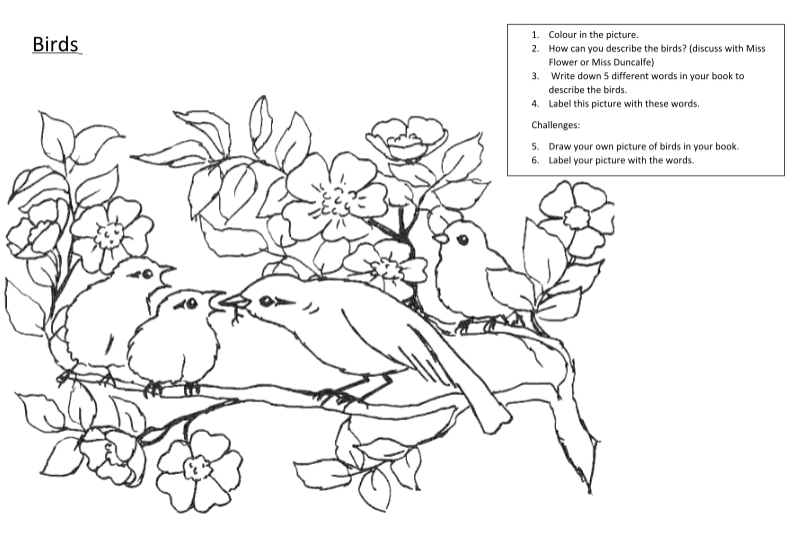

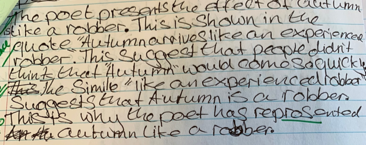
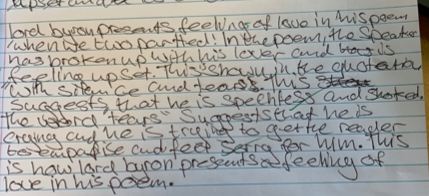
 Much Ado About Teaching