
Introduction
So, this week has been significantly more intense than last week. I have classically gone and done what I always do; agree to take too much on. At the beginning of the week, I agreed to go and talk to the Ofsted inspectors for university, which not only but a halt on my planning time, but also meant I had to rearrange my PT meeting this week. On top of this, I had my university tutor come to observe me on Tuesday afternoon and, despite her being so lovely, I found myself getting unnecessarily nervous for this. So, let’s just say the stress was ramped up a level and I ended up breaking down a bit on Wednesday. However, my lessons on Thursday and Friday proved to be a million times better and I have started the weekend with a new instilled confidence in myself.
Ofsted Round 2
Not long after getting an email, about Ofsted coming to carry out the second half of the university’s inspection, the course leaders sent another email around asking for volunteers to come and speak to the lead inspector. As I had a free in period 5, I offered to come into university, which meant that I sacrificed my planning time, to speak to Ofsted.
Obviously, I am not sure what the outcome is, but the inspector seemed very happy with what we were telling him about the course… fingers crossed to stay outstanding!
University Tutor Visit
As previously mentioned, I was a complete nervous wreck thinking about the university tutor’s visit; I didn’t know what to expect and had no idea how the class would react to my lesson – after the supply teacher incident, my confidence was knocked with this class.
My lesson was the third lesson on Shakespeare sonnets; we focused on the meaning of sonnet 18 and began to compare it to the beginning of sonnet 130. I managed to ensure that every child had contributed verbally, at least once, during the lesson, thanks to my handy ‘good names’ list on the board. I have to say; a lot of credit goes to my gorgeous year 7s… they worked so diligently and had some fantastic comments – I am continuously and regularly very proud to be teaching them!
It didn’t take long for the nerves to wear off to be fair, I got into the swing of the lesson pretty quickly and my confidence grows every time I teach something, and they prove to me in the plenary they have understood it.
I had a meeting with my UT and AT after this lesson and they both had super nice things to say. We worked through my targets for the rest of placement one and my UT noted that, if I gather enough evidence, it seems as if I am teaching at a ‘very good’ standard; for those of you not familiar with PGCE talk, this is the highest you can be. It’s safe to say that I was elated and extremely proud of myself – all the hard work looks like it is going to pay off!
I am going to leave this section with a part of the email that my UT sent me, as a follow up to the visit:
‘Joanne, you should be really proud of the lesson that you taught. You have a calm and confident teaching persona and it is clear to see that you have already established a lovely rapport with your learners: well done. You used a range of questioning techniques to ensure that all learners were involved in the lesson and made progress, and you demonstrated some live modelling with the visualiser.’
Debate Mate
One of the English teachers runs the ‘Debate Mate’ club after school on Wednesdays and, as I didn’t have a PT meeting this week, I came along to help out. Debate Mate is basically a club to help students with their debating skills and they also have an opportunity to compete in national competitions. (Click here to watch the 2018/19 launch video).
I only teach one of the students who attended, but it was super nice to be able to meet a variety of different students. It also amazes me at how much talent lies within the midst of the student body. The students that spoke, spoke eloquently and with such passion and confidence… at the ages of 11-14!
Midweek Breakdown
You would think that after all this great news at the beginning of the week I would be feeling elated and confident in my role as a teacher, that is what any normal human should feel after such fantastic news. Tuesday evening, I definitely felt that way! But for some reason come Wednesday evening I felt my panic and stress levels begin to rise and I just felt utterly overwhelmed and helpless. I negotiated with myself and only checked over my lesson plans for the next day before having an early night.
I’m not going to go into any details, I have no idea as to why this happens to me. It happened the previous week, but I presumed it was a one-off ordeal. It’s starting to become a pattern mid-week, so I am just going to monitor myself and adjust what I am doing accordingly.
Back on Track
Despite this set back Wednesday evening, Thursday proved to be a great day. The only lesson I had to teach was the lovely year 7s…. but, unfortunately, my AT was off again so I was in with a supply! I began to feel the beginnings of panic but held myself together – I knew what I was going to teach (thanks to a kind teacher who talked it through with me in the morning) and I was confident that I knew the lesson well enough, so I only really had to think about behavioural management techniques – that and pray they would be better behaved than last time!
My plan was to give them between 20-30 minutes to finish off their poetry comparisons (I’ve started marking these and some of them have blown me away – there aren’t many adults I know that can write this eloquently about Shakespeare, let alone an 11/12-year-old!), and then we were going to move onto their spacing task for this fortnight – viewpoint writing. The spacing task was to get them to agree or disagree with the statement: ‘‘Parents today are over-protective. Children should be allowed to take part in risky experiences to prepare them for later life.’
Yet again, I have to give credit to the year 7s. They now completely see me as their teacher – it is just the sweetest thing. I felt fully in control all lesson and, despite a few of them getting excited about the spacing task (one kid was adamant that if you went to the park without an adult you were extremely likely to get kidnapped, another asked what would happen to you if you got kidnapped) – I managed to keep them all on task appropriately so I’m calling that a win!
Progress with a Student
One of the biggest achievements for me this week is making progress with one of my more difficult students in year 9. I can’t remember if I have written about this before, so I’ll just do a quick background: one of my year 9 students has a lot of additional needs, which has related to him being off task and disruptive in lessons. I’m not going to give any details, but there are considerable reasons behind this that I am aware of and I have agreed with the normal teacher that she will help me with him. He very rarely does anything more than write the date in his lessons.
Due to him being in Ready to Learn or being excluded, he has only been in the class twice before, and I have only taught part of one of these lessons.
In fact, it is very rare to have the whole class in – more often than not there has been at least 6/31 off for various reasons.
The first full lesson I taught them… there were only 2 off and I had to adjust the seating plan accordingly. On the whole, my behaviour management was not great in that lesson, but I am going to focus on the positive in this section.
I managed to get him to verbally tell me which introduction was better and why; he responded accurately giving valid reasons behind his opinion. He took himself off to refocus during the lesson but, for me, the biggest win was getting him to stand behind a chair at the end of the lesson. It was period 5, so obviously they are all keen to leave, but I have been insisting on silence and order at the end of the lesson to maintain control of the class. He rushed to the door just as the bell went and I calmly asked him stand behind his chair. After reminding him to do this a few times, also informing him that I too would like to leave, we compromised with him standing behind the closest chair. At the end of the following lesson, I got him to stand behind his own seat.
This might not sound like very much, but I did not think I would even get to talk to me in a respective manner, let alone get him to follow my instructions and even begun to do some work. In just a week I have gotten so far with him, thanks to the teacher working with me acting as teaching assistant as well. I am hoping to see more progress, hopefully he will get to the stage where he participates in a lesson without causing too much disruption, even if he doesn’t do it whilst I am teaching them. It’s the smallest steps that feel like the biggest in learning to teach.
EPS SEND Assignment Feedback
On a final note, we got our feedback on the first part of our SEND investigations and I am thrilled to say that not only was my feedback good, but it was also extremely helpful. I have never had such specific feedback that I completely understand and agree with before. I’m not going to look at my assignment until next weekend, but I am glad that my mind is at ease with regards to this.
Teaching Targets
Last Week’s Targets:
- Examples & subject knowledge: Subject knowledge is going to be one of those I will be constantly improving, so I am going to remove it from my weekly targets – I am aware I am going to have to adapt and learn as I go, especially as I move from school to school over the PGCE year. With regards to the examples, I am becoming more confident and finding that planning my examples into my lesson plans really helps me – even if I end up not using them and eliciting a model from the students.
- Questioning: I have been attempting to use think time, something that is definitely a lot easier in theory than in practice, but I have come to the realisation that before I can even think about attempting some of the more advanced teaching skills, I need to work on my basic questioning skills.
This Week’s Targets:
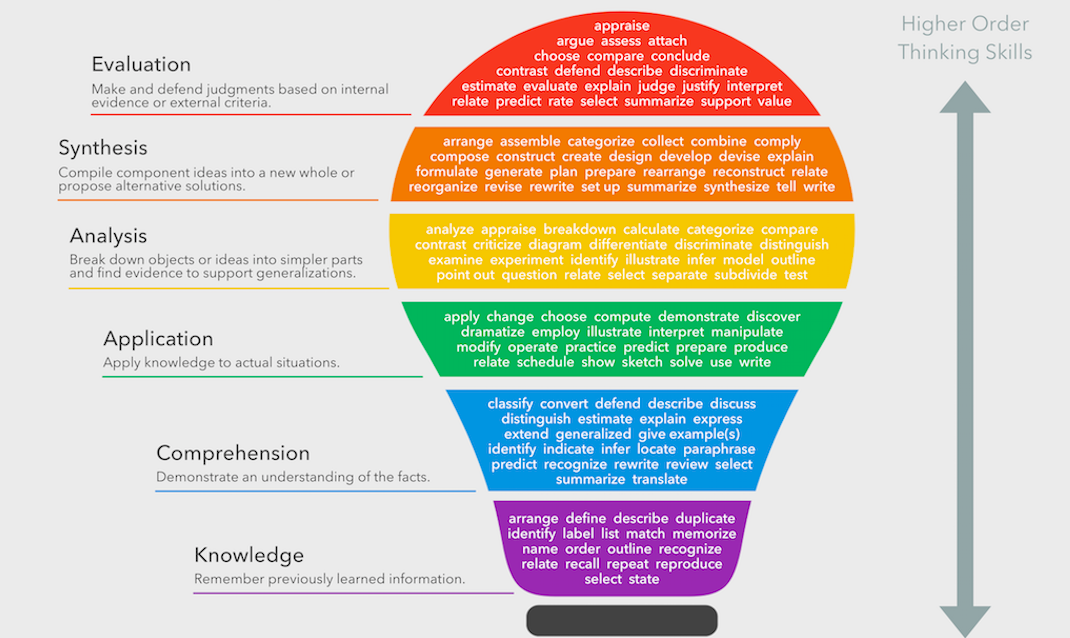
- Questioning: Building on what I have previously said, I have noted to adapt my questioning techniques depending on what I know about the learner I am questioning: ability levels, any SEND or any prior knowledge. To do this, I am going to attempt to use Bloom’s Taxonomy, something I am going to have to read into a bit more before I can make effective use of it. My university tutor suggested I laminated seating plans so I could write next to the student what kind of question I should be asking them: to monitor who is contributing to the lesson and to what level their answers will be. I am going to attempt to include this into my planning – hopefully it will be effective!
- Assessment for learning: another target that has cropped up this week, is that I have been neglecting to use assessment for learning techniques to gauge if learners know what they are supposed to be doing; particularly when I give input or set an extended piece of writing. On Friday, I used a few techniques (thumbs up/middle/down; temperature check; common problems) to assess this, and already I am seeing a difference in how well the students are understanding my instructions. As noted in some of my earlier blogs, one of my biggest concerns is that I am not clear enough in how I speak to the pupils, thereby I am wasting my time and their time by having to consistently reword my instructions because I wasn’t clear enough the first time.
J
Currently Reading:
The Penguin Book of First World War Poetry
Reading first world war poetry on Remembrance Sunday – the centenary of the end of WWI no less – made the readings ever so more poignant. Poetry is one of those beautiful forms where the poet can express a multitude of emotions in written word – often, in my opinion, much more effectively than prose. I find that poetry is not the same read inside my head, so I often read poetry aloud to myself, in doing this last Sunday it made me realise how important this poetry is in remembering those who have gone.
The last surviving English veteran of WW1 died in 2009; in keeping the heightened, harrowing images of ‘the war to end all wars’ alive through various creative means, we are able to remember and be thankful to all of those who fought for us to live the lives we live today, also, hopefully, serving as a reminder to what we should never have to live through as a species again.
The Importance of Being Earnest – Oscar Wilde
So far so good! I’ve not read much but I am looking forward to reading some more this week!
Mrs Dalloway – Virginia Woolf
I have finally finished this novel and I reluctantly say that I did not particularly enjoy this novel. However, I can totally appreciate why people do love Woolf’s writing, the description is detailed and eloquent and her characterisation is phenomenal – I just did not overly enjoy the story.
Dark Woods – Steve Voake
The main gist of the story is that two children go off exploring in the woods near their campsite and a man finds them and drugs them, bringing them up to his cabin deep within the mountain forest. He then shows them that he can bring dreams alive; all he wants them to do is go into his dreams and bring his dog back to life. But there is a twist: he has brought Cal’s nightmare to a reality, and the kids set it free to torment them as they try to escape.
This is a novel that you really have to suspend your disbelief for and I find, when reading children’s and young adult novels, that I read them slightly differently to how I would read other novels; I imagine what my childhood self would’ve thought about them. Bringing myself back to opening up my imagination in any way possible, I am finding I am actually really enjoying this book. It is a simple horror for young people and holds the same gripping nature I would find in that of a Stephen King novel, only made accessible for the younger generation.
Exiting Nirvana: A Daughter’s Life with Autism – Clara Claiborne Park
The chapter I read this week was about her daughter’s experience with language – how long it took her to be able to communicate her unique way of seeing the world. The more I read into autism, the more I feel as if we are extremely fortunate to have these individuals in the world; different perspectives bring layers of meaning to an otherwise mundane world.
 Much Ado About Teaching